The Future of Data Centers: What's Driving the Next Wave of Infrastructure
Published
Data centers are being rebuilt from the ground up to meet demands that didn't exist five years ago. Here's what's changing and why it matters.
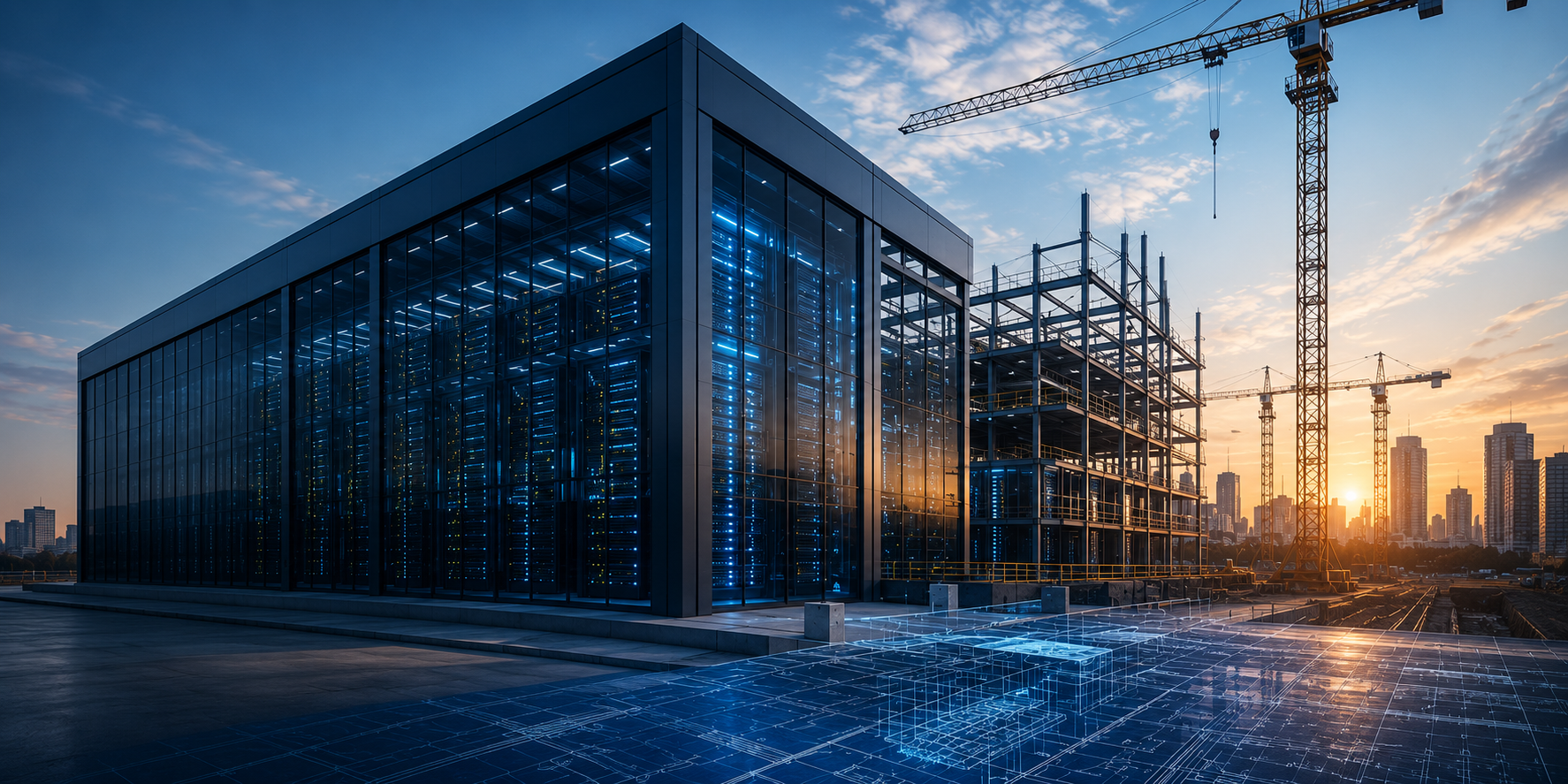
Data centers have existed for decades, but the infrastructure being built today looks almost nothing like what came before. A combination of artificial intelligence workloads, edge computing demands, sustainability pressure, and power constraints is forcing a fundamental rethinking of how data centers are designed, built, and operated.
AI Is Rewriting the Power Equation
The single biggest driver of data center change right now is artificial intelligence. Training and running large AI models requires a density of compute power that traditional data center designs simply weren't built to handle.
A standard server rack in a conventional data center might draw 5 to 10 kilowatts. AI compute racks — packed with GPUs and specialized accelerators — can draw 50 to 100 kilowatts or more. That's not a minor upgrade challenge. It requires completely rethinking power distribution, cooling infrastructure, and physical layout from the ground up.
This is why hyperscalers like Microsoft, Google, Amazon, and Meta are committing to multi-billion dollar data center construction programs. The existing global inventory of data center capacity is largely unsuitable for the power densities AI workloads demand.
Cooling Is the New Bottleneck
When rack densities increase tenfold, air cooling — the standard approach for conventional data centers — stops being viable. Moving enough air to cool a 100kW rack is physically impractical at scale.
The industry is rapidly shifting toward liquid cooling. Direct liquid cooling runs coolant directly to the chip level, removing heat orders of magnitude more efficiently than air. Immersion cooling submerges entire servers in non-conductive liquid, achieving even higher efficiency.
Neither of these approaches is new — both have existed in specialized applications for years — but AI is forcing them into mainstream data center design at scale and speed the industry has never seen before.
The Power Problem
Data centers already consume roughly 1-2% of global electricity. AI is expected to push that significantly higher over the next decade. This creates a collision between data center growth and sustainability commitments that every major technology company has made.
The response is coming on multiple fronts. Nuclear power is seeing renewed interest specifically because it provides reliable, carbon-free baseload power at the scale data centers need. Several major technology companies have signed agreements with nuclear operators or invested directly in small modular reactor development.
Renewable energy procurement is accelerating, though the intermittent nature of wind and solar creates challenges for facilities that must run continuously. Battery storage, hydrogen fuel cells, and grid modernization are all part of the long-term answer.
Edge Computing and Distributed Infrastructure
Not everything is moving toward larger, more centralized facilities. A parallel trend is pushing compute capacity closer to where data is generated and consumed.
Autonomous vehicles, industrial automation, remote healthcare, and real-time financial systems all have latency requirements that centralized cloud infrastructure can't meet. Processing data at the edge — in smaller facilities closer to the end user — reduces the round-trip time between request and response.
This is driving investment in a new category of smaller, modular data centers that can be deployed quickly in locations that traditional large-scale facilities would never consider. Prefabricated, containerized data center modules can be shipped and operational in weeks rather than the years required for traditional construction.
What This Means Long Term
The data center industry is in the middle of a capital investment cycle unlike anything it has seen before. Estimates for global data center construction spending over the next five years run into the trillions of dollars.
The facilities being built today will define the digital infrastructure of the next two decades. The decisions being made now — about power sources, cooling technology, location strategy, and compute architecture — will have consequences that extend far beyond the technology industry into energy grids, real estate markets, water consumption, and regional economic development.
For anyone involved in industrial instrumentation, process control, or facility infrastructure, the data center build-out represents one of the largest concentrations of capital spending in a single sector in modern history. The monitoring, control, and measurement requirements for facilities operating at this scale and power density are substantial — and growing.